








Quick answer: A stainless steel ice bath is the better pick if you want a permanent setup that holds cold water all year, looks great and pairs with a chiller. An inflatable ice bath is the better pick if you want something light, cheap to get started with, easy to move or pack away. Both get you just as cold.
We get asked this question a lot. People see a sleek timber and steel tub next to a soft, portable one and wonder what the real difference is. The water is cold in both. So what are you actually paying for? Let's break it down in plain English.
What is the difference between a stainless steel and an inflatable ice bath?
It comes down to what holds the water.
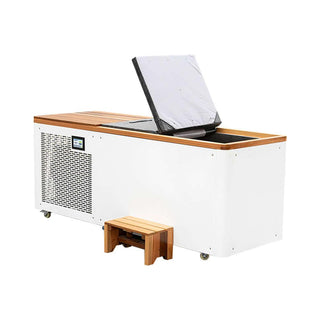
- Stainless steel ice baths have a rigid metal tub inside. Ours, the Arctic Stainless Ice Bath, uses a #304 stainless steel liner (1.5 mm walls, 2.5 mm base). It sits inside a Thermo Pine shell from Finland, with insulation between the wood and the metal.
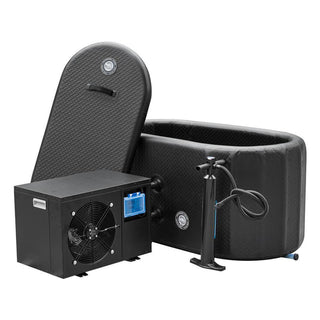
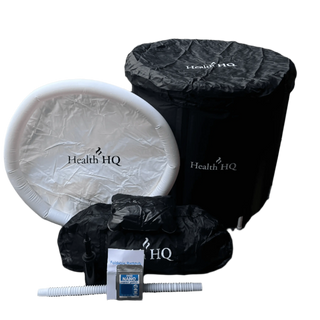
- Inflatable ice baths are made from layers of PVC that you pump up with air. Our Atlas Ice Bath uses drop-stitch PVC sides and a layered, insulated base. Our Genesis Inflatable Ice Bath holds about 400 L of water.
Think of it like a house versus a tent. Both keep you dry. One is built to stay put for years. The other packs into a bag.
How do inflatable ice baths stay firm?
Good inflatable tubs use a material called drop stitch. Two layers of fabric are joined by thousands of fine threads running between them. An air-tight coating goes on the outside. When you pump air in, the threads hold the two layers at a set distance. That lets the walls stay flat and firm instead of ballooning out.
This is the same idea used in many inflatable paddle boards. It is why a quality inflatable ice bath feels solid when you lean on it.
The trade-off is simple. It is still air and plastic. Sharp objects, pets' claws and rough ground can damage it. That is why most come with a repair kit, and why it pays to set them up on a smooth, flat surface.
Why is stainless steel used for ice baths?
Stainless steel is popular for water tanks, kitchen benches and ice baths for good reasons:
- It resists rust. Stainless steel forms a thin protective layer on its surface. Oxygen in the air and water helps keep that layer healthy.
- It is smooth and hard. There are fewer places for grime to cling, so it is easy to wipe clean.
- It does not puncture. No air to lose, no patches needed.
One thing worth knowing: salt is hard on stainless steel. The Nickel Institute notes that type 304 stainless steel is satisfactory for long-term storage of water with chloride (salt) levels below about 200 ppm. So use fresh water from your tap or tank, and do not add salt or bath salts to a steel tub.
Which one keeps the water colder for longer?
On its own, neither tub makes water cold. You either add ice or connect a chiller. A chiller is a small unit that pumps water through, cools it and sends it back. (We explain how they work in How Does an Ice Bath Chiller Work?)
What the tub does is hold the cold. Insulation and a good lid matter most here.
- The Arctic has an insulated lining between the timber and the steel, plus an insulated cover.
- The Atlas has double-layer insulated sides and a triple-layer base (PVC, 5 mm EVA foam, PVC), with an inflatable insulated lid included.
Both work with our Storm Plus chiller, which lets you set the temperature anywhere from 3 to 40°C and runs off a standard 10 amp house plug. With a chiller running, the water stays at the temperature you set, so the tub mainly affects how hard the chiller works.
Which one is easier to set up and move?
This is where inflatables shine.
- Atlas Double: 1500L*700D*700H mm when set up, about 11 kg, and it packs down into a travel backpack. No tools needed.
- Arctic Tub: 1200L*700D*700H mm, about 120 kg empty, 460 L capacity. It comes fully assembled, so you just need a flat, solid spot and a way to get it there.
- Arctic Double: 1600L*700D*830H mm, about 135 kg empty, 730 L capacity.
Remember that water is heavy. Every litre weighs about 1 kg. A full tub of a few hundred litres needs a level, strong base, whichever style you choose.
If you rent, move often, travel to events or want to try cold plunging before you commit, an inflatable makes a lot of sense. If you own your home and want a set-and-forget fixture on the deck, steel is hard to beat.
Which one is easier to keep clean?
Both need clean water habits. Shower before you get in, keep the lid on and use filtration if you have a chiller. Our Storm Plus chiller has a built-in filter and ozone sanitation.
Stainless steel has the edge because the surface is hard and smooth. It is quick to wipe down when you drain it. PVC can be cleaned well too. It just needs a softer touch so you do not scratch or wear the surface.
For a full routine, read How Do You Keep Ice Bath Water Clean?
Does the type of tub change how cold water feels?
No. Cold water at 10°C feels like cold water at 10°C. The first minute is the hardest in any tub. Researchers call it the cold shock response: a sharp gasp, fast breathing and a jump in heart rate.
A small study by Eglin and colleagues found that after five short practice dips in 15°C water, heart rate and breathing in the first minute were lower than on the first dip. The first gasp stayed about the same. In plain terms, your body can get used to the cold, but it still pays to ease in slowly and stay calm.
Whichever tub you choose, start with short sessions and never plunge alone if you are new to it. If you have a health condition, are pregnant or take medication, check with your GP before you start using an ice bath.
Key takeaways
- Stainless steel suits a permanent, year-round setup. It is tough, smooth, easy to clean and will not puncture.
- Inflatable suits renters, travellers and first-timers. It is light, quick to set up and packs away.
- The cold comes from ice or a chiller. The tub's job is to hold it, so insulation and a good lid matter.
- Use fresh water in a stainless steel tub and skip the salt.
- Start slow. The first minute is the hardest in any ice bath.
Frequently asked questions
Is a stainless steel ice bath better than an inflatable one?
Neither is better for everyone. Stainless steel is better for a permanent, long-lasting setup, while an inflatable is better if you want something light, portable and easy to store.
Can I use a chiller with an inflatable ice bath?
Yes. Our Atlas inflatable ice bath can be paired with the Storm Plus chiller, which lets you set the water anywhere from 3 to 40°C.
Will an inflatable ice bath puncture?
It can if it meets sharp objects or rough ground. Set it up on a smooth, flat surface and keep the repair kit handy.
Can I put salt in a stainless steel ice bath?
We recommend you do not. Salt (chloride) is hard on stainless steel, so fresh tap or tank water is best.
How heavy is a full ice bath?
Each litre of water weighs about 1 kg, so a full tub of a few hundred litres weighs a few hundred kilograms plus the tub. Always place it on a level, solid base.
Still deciding? Have a look at the Arctic Stainless Ice Bath and the Atlas Ice Bath, or talk it through with us. Call us on 03 662 9381 or email info@healthhq.co.nz. We are always happy to help you find the right fit.
Sources: Nickel Institute, Resistance of Stainless Steel to Corrosion in Naturally Occurring Waters; Eglin et al. (2015), Rapid habituation of the cold shock response, Extreme Physiology & Medicine; NRS, What is Drop Stitch?

