








Quick answer: A cold shower is the easiest way to try cold water. It is free, quick and needs no gear. An ice bath goes further. Your whole body sits in water at a temperature you choose, for as long as you choose. Many people start with cold showers, then move to an ice bath for more control.
What is the difference between an ice bath and a cold shower?
Both use cold water. The big difference is how much of you gets cold, and how evenly.
- Cold shower: water runs over part of your body at a time. Your back might be cold while your legs are not. The temperature depends on your tap water and the time of year.
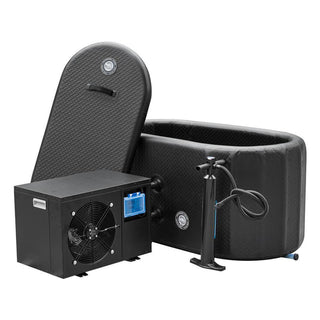
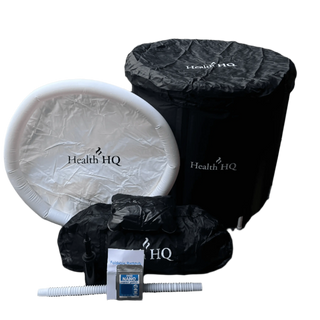
- Ice bath: you sit in still, cold water up to your chest or shoulders. Almost your whole body is cold at the same time. You can set the temperature and keep it steady.
Water pulls heat from your skin much faster than air does. So when more of your skin is in the water, you cool down faster. That is why an ice bath feels so much stronger than a shower at the same temperature.
What does the research say about cold showers?
The biggest study on cold showers comes from the Netherlands. It followed 3,018 adults aged 18 to 65. People had their normal warm shower, then finished with 30, 60 or 90 seconds of cold water every day for 30 days. The cold water was about 10 to 12°C on average.
Here is what the researchers found:
- The cold shower groups reported 29% less sickness absence from work than the group who did not take cold showers.
- They did not report fewer days of feeling unwell overall.
- The most common benefit people described was feeling more energy.
It is a good study, but it has limits. People reported their own results and knew which group they were in. So it shows a link, not a promise.
What does the research say about ice baths?
A 2025 review pulled together 11 studies with 3,177 people. The water in those studies ranged from 7 to 15°C, and people stayed in from 30 seconds up to two hours.
The review found:
- Stress scores were lower 12 hours after cold water immersion.
- Some studies linked cold water to better sleep quality and quality of life.
- Markers of inflammation went up straight after a cold dip. This is the body's short-term reaction to the cold.
The authors were clear that the evidence is still early. There are only a few trials, many were small, and most people studied were men. Research suggests cold water may help some people feel good, but more work is needed. If you want to read more, see our guide on how often to use an ice bath.
What happens to your body in the first minute?
When cold water hits your skin, your body reacts on its own. This is called the cold shock response. You may notice:
- A sharp gasp
- Fast breathing
- A faster heart rate
A 2024 research review says this reaction peaks in the first 20 to 90 seconds and has mostly settled by three minutes. The same review found the response gets smaller after about four cold dips, as your body gets used to it.
This happens in a cold shower too, but it is usually stronger in an ice bath because more of you is cold at once. A simple tip many people use: step in slowly, then focus on slow, calm breaths out until the gasp passes.
Which one should you choose?
It depends on what you want. Here is a simple way to think about it.
A cold shower may suit you if:
- You want to try cold water for the first time
- You only have a minute or two
- You are travelling or do not have space for gear
An ice bath may suit you if:
- You want the same temperature every time
- You want your whole body in the cold, not just parts
- You want to track your time and temperature as you build up
- You like the idea of a set ritual, maybe after training or a sauna
Many people do both. A cold finish to the morning shower on busy days, and an ice bath when there is more time.
How do you get started safely?
- Talk to your GP first if you have a heart condition or any health condition, are pregnant, or take medication.
- Start short. Try 30 seconds of cold at the end of your shower, or a short dip in warmer cold water.
- Know your temperature. A simple ice bath thermometer takes away the guesswork.
- Breathe slowly. Let the first gasp pass before you settle in.
- Never go alone into very cold water if you are new, and get out if you feel dizzy, numb or unwell.
- Warm up gently afterwards with dry clothes and movement.
Key takeaways
- Cold showers are free, fast and a great way to try cold water.
- Ice baths cover your whole body at a steady temperature you control.
- A large study linked short cold showers to less self-reported sick leave, but not fewer sick days.
- Research on ice baths is promising but still early.
- The cold shock gasp usually settles within a few minutes and gets easier with practice.
Frequently asked questions
Is a cold shower as good as an ice bath?
They are not the same. A cold shower is quick, free and easy, while an ice bath covers your whole body in water at a set temperature. Many people start with showers and move to an ice bath once they want more control.
How long should a cold shower last?
In the large Dutch study, people finished a warm shower with 30, 60 or 90 seconds of cold water. A short finish like this is a fair place to start, and you can build up as you get used to it.
What temperature is an ice bath?
Studies in a 2025 review used water from 7 to 15°C. Many people start at the warmer end and use a thermometer so they know exactly where they are.
Why do I gasp when I get into cold water?
That is the cold shock response. It is your body's automatic reaction to cold skin, and it usually peaks in the first 20 to 90 seconds and settles within about three minutes.
Who should check with a doctor first?
Anyone with a heart condition or other health condition, anyone who is pregnant and anyone on medication should check with their GP before trying cold showers or ice baths.
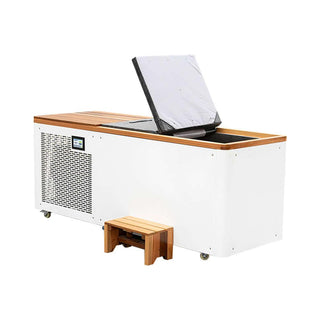
Thinking about taking the next step from cold showers? Have a look at our ice bath range, including the Arctic Stainless Ice Bath in Japanese sugi cedar. Got questions? Call us on 03 662 9381 or email info@healthhq.co.nz. We are always happy to help.
Sources: Buijze et al. (2016), The Effect of Cold Showering on Health and Work, PLOS ONE; Cain et al. (2025), Effects of cold-water immersion on health and wellbeing: a systematic review and meta-analysis, PLOS ONE; Barwood et al. (2024), Habituation of the cold shock response: a systematic review and meta-analysis, Journal of Thermal Biology; Tipton, M. (2019), Cold water shock explained, PBS NewsHour / The Conversation.

