



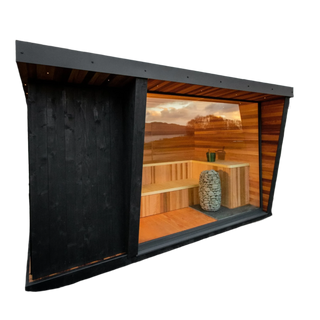





Quick answer: A well-insulated home sauna with an electric heater usually takes about an hour to reach a good bathing temperature. Harvia says it takes "about an hour" for a properly insulated sauna, and HUUM says its heaters warm a sauna to 80 °C within an hour. Room size, glass, insulation and heater power can make it faster or slower.
One of the most common questions we get is simple: "If I turn it on now, when can I jump in?" The good news is that most home saunas are ready in about the time it takes to cook dinner. Here is what the heater makers say, and what speeds things up or slows them down.
How long does an electric sauna take to heat up?
For most home saunas, plan on about one hour.
- Harvia's heater manuals say it takes about an hour for a properly insulated sauna to reach bathing temperature.
- HUUM says its heaters raise the temperature by about 10 °C in the first 8 minutes, and heat the room to 80 °C within an hour.
The air warms up first. The stones, benches and walls take a bit longer to soak up the heat. That is why a sauna often feels even better a little while after the thermometer first reaches your target. The air is hot, and now the whole room is warm too.
What temperature should the sauna reach before I go in?
Harvia suggests a sauna room temperature of about 65 to 80 °C, depending on the heater model. You do not need to wait for the very top of the range. Many people start their first round a little cooler and let the room keep climbing while they sit.
If you want to read more about temperature, our guide on how to sauna for the first time is a great place to start.
What makes a sauna heat up faster or slower?
Every sauna is a little different. These are the big things that change your heat-up time:
- Room size. More air to heat means more time. A cosy two-person sauna warms faster than a big family cabin.
- Heater power. A heater that is the right size for the room heats it in good time. A heater that is too small can take much longer, and may struggle to reach a good temperature at all.
- Insulation. Good insulation keeps the heat in. Harvia's timing of about an hour is for a properly insulated sauna.
- Glass, stone and log walls. Glass doors, glass walls, tiles and concrete soak up and lose heat. Harvia says these walls increase the heater output you need.
- The stones. Harvia says stones should be stacked loosely so air can flow through the heater. Stones packed too tight, or old crumbling stones, can slow things down. Our guide to sauna stones and when to replace them explains more.
- Where it lives. An outdoor sauna on a frosty Canterbury morning starts from a much colder place than an indoor sauna in a warm house. It will often need extra time in winter.
How do I know if my heater is the right size?
A handy rule of thumb from HUUM is about 1 kW of heater power for every 1 m³ of sauna room.
Glass and other uninsulated walls change the maths. Harvia's manuals say to add 1.2 m³ to the room size for every square metre of uninsulated wall, like glass or brick. Harvia gives an example: a 10 m³ sauna with a glass door needs about the same heater output as a 12 m³ room. Harvia also says to multiply the room size by 1.5 if the sauna has log walls.
Not sure where your sauna sits? Our guide on what size and style of heater to use walks you through it. And remember, the heater must be hard-wired by a registered electrician.
What about wood-fired and infrared saunas?
Wood-fired saunas are a bit different. The heat-up time depends on how big the stove and room are, how dry your wood is, and how you build the fire. Dry, well-seasoned wood burns hotter and cleaner, so it helps a lot. Our guide to the best wood to burn in a sauna stove has more tips.
Infrared saunas work in another way. Infrared panels warm your body directly, so they run at a lower air temperature than a traditional sauna. Warm-up times vary by model, so always check the manual for your cabin.
How can I make my sauna heat up faster?
A few simple habits can save you time:
- Keep the door shut while it heats. Every peek lets warm air out.
- Use the timer or app. Many heaters and controls let you set a start time, so the sauna is warm when you get home. Harvia's mechanical timers even have a "preset" setting for this.
- Check your stones once a year. Replace crumbling stones and stack them loosely.
- Keep the vents set as the manual says. Good airflow matters for a healthy, even heat. Harvia recommends the air in the room changes about six times an hour.
- Give it extra time in winter, especially for an outdoor sauna.
A quick safety note: sauna heat is strong. If you have a health condition, are pregnant or take medication, please check with your GP before using a sauna.
Key takeaways
- Most well-insulated electric home saunas take about an hour to reach bathing temperature.
- Harvia suggests a sauna room temperature of about 65 to 80 °C.
- Room size, heater power, insulation, glass and the outside weather all change the heat-up time.
- A good starting rule is about 1 kW per m³, with extra allowance for glass and uninsulated walls.
- Use a timer, keep the door shut and look after your stones to get ready faster.
Frequently asked questions
How long does a home sauna take to heat up?
Most well-insulated home saunas with an electric heater take about an hour to reach bathing temperature. Big rooms, glass walls or cold weather can add time.
Can I use the sauna before it is fully hot?
Yes, many people start a little cooler and let the room keep warming while they sit. Just make sure the heater has been running long enough for the stones to be hot if you want to pour water on them.
Why is my sauna taking so long to heat up?
Common reasons are a heater that is too small for the room, lots of glass, poor insulation, tightly packed or old stones, or a very cold day. If it is slower than usual, get a registered electrician or the heater maker to check it.
Does a bigger heater heat the sauna faster?
A heater that is correctly sized for your room will heat it in good time. The best choice is the size the heater maker recommends, so check their sizing table for your room.
Do outdoor saunas take longer to heat up in winter?
Yes. An outdoor sauna starts from a colder temperature in winter, so it usually needs extra time to warm up.
Thinking about a sauna of your own, or a new heater for the one you have? Have a look at our saunas and Harvia and HUUM sauna heaters. We are always happy to help you work out the right size. Call us on 03 662 9381 or email info@healthhq.co.nz.
Sources: Harvia: Quick heater instructions for models with mechanical controls; Harvia PC60E heater manual (use and sauna room); Harvia L30 heater manual (use and sauna room); HUUM: Sauna heaters, what to consider before making a purchase.

