








Quick answer: HRV (heart rate variability) is the small change in time between one heartbeat and the next. A higher reading than your normal often means your body is relaxed. A lower reading than your normal can mean stress, a poor night's sleep, a hard workout or a few drinks. It is a helpful clue, not a diagnosis.
What is HRV?
Your heart does not beat like a metronome. Even when it beats 60 times a minute, the gaps between beats are not all exactly one second. Some are a little longer. Some are a little shorter.
Heart rate variability (HRV) is the measure of those tiny changes. A review in Frontiers in Public Health puts it simply: HRV is "the fluctuation in the time intervals between adjacent heartbeats."
The changes are measured in milliseconds (ms). That is why your watch or ring shows HRV as a number like 35 ms or 70 ms.
Why does HRV go up and down?
Your body has two main "settings" running in the background:
- Fight or flight. This setting gets you ready for action. Your heart beats in a steadier, more even rhythm.
- Rest and digest. This setting helps you calm down and recover. Your heart rhythm becomes more flexible, so the gaps between beats vary more.
Harvard Health explains it like this: when you are in more of a fight-or-flight mode, the variation between beats tends to be lower. When you are more relaxed, the variation may be higher.
So HRV is a window into which setting your body is leaning towards right now.
What is RMSSD on my HRV app?
Many apps show a number called RMSSD. It stands for "root mean square of successive differences." That is a mouthful. In plain English, it looks at how much each heartbeat gap differs from the one before it.
Researchers use RMSSD as the main quick measure of the "rest and digest" side of your nervous system. That is why many wearables use it for their HRV score.
What can lower your HRV?
Lots of everyday things can nudge your HRV down for a day or two. Harvard Health lists stress, poor sleep, an unhealthy diet, difficult relationships, isolation and a lack of exercise as things that can upset the balance.
Alcohol is a big one. A Finnish study tracked more than 4,000 workers wearing heart monitors over about 12,400 days. In the first three hours of sleep after drinking, the researchers found:
- After a small amount of alcohol, heart rate was about 1.4 beats per minute higher than on alcohol-free nights.
- After a moderate amount, heart rate was about 4 beats higher and RMSSD was about 5.7 ms lower.
- After a large amount, heart rate was about 8.7 beats higher and RMSSD was about 12.9 ms lower.
The authors said alcohol was linked to these changes in a dose-dependent way. In other words, more drinks lined up with bigger changes. They also found that being young or exercising regularly did not protect people from the effect.
Other common reasons for a dip include a hard training session, a late night, being unwell, travel and a busy, stressful week. If you drink coffee late in the day and sleep badly, that can show up too. Our guide on how late you can drink coffee without hurting your sleep goes into that.
Is a higher HRV always better?
Not always. This is where people get tripped up.
- Your number is personal. HRV varies a lot from person to person, even between healthy people of the same age. Age and sex both make a difference. Comparing your score with a friend's tells you very little.
- Your trend matters most. The useful question is, "How does today compare with my normal?" A week-long average is more helpful than one morning's reading.
- Higher is not automatically healthy. The Frontiers review warns that "higher HRV is not always better", because some health problems can also push HRV up.
Harvard Health's advice is a good one to keep in mind: do not get too confident if your HRV is high, or too worried if it is low.
How do you get a reliable HRV reading?
A few simple habits make your numbers much more useful:
- Measure at the same time. Overnight or first thing in the morning works best, before coffee and before checking your phone.
- Use the same device. Different devices and different recording lengths give different numbers. The Frontiers review notes that short and long recordings are not interchangeable.
- Think about the device type. Harvard Health notes that chest strap monitors tend to be more accurate than wrist devices.
- Watch the trend. Look at your 7-day average, not one-off spikes or dips.
- Add how you feel. Sleep, mood, soreness and energy matter too. HRV is one clue among many.
How can you use HRV to plan your recovery?
Here is a simple way many people use it:
- HRV around your normal and you feel good? Carry on with your usual plan.
- HRV well below your normal for a couple of days? Treat it as a nudge to go easier. Choose a lighter session, a walk or an early night.
- Low HRV and you feel unwell, or it stays low for a long time? Talk to your GP. A wearable is not a medical device and cannot tell you why your number has changed.
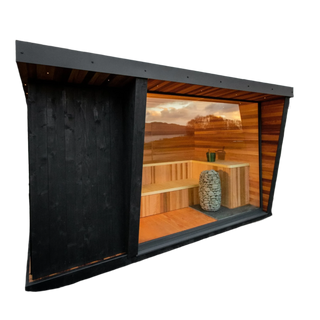
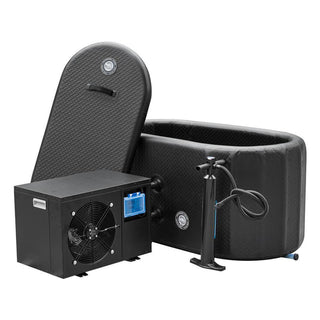
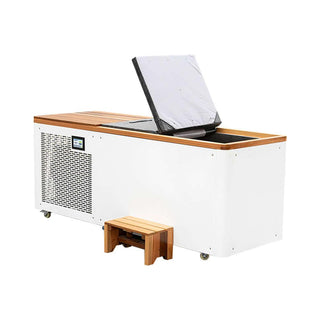
Many people also build calm, regular habits into their week. Good sleep, gentle movement such as a walk after meals, time outdoors and relaxing routines like a sauna session or a cold plunge are all popular. Some people like to watch how their own HRV trend responds to these habits over a few weeks. Everyone is different, so treat your data as your own experiment.
If you have a health condition, are pregnant or take medication, check with your GP before starting sauna or ice bath sessions.
Key takeaways
- HRV is the small variation in time between heartbeats, measured in milliseconds.
- Higher than your normal often means a more relaxed state. Lower than your normal often means stress, poor sleep, hard training or alcohol.
- Compare your HRV with your own trend, not with other people.
- Measure at the same time each day with the same device, and look at weekly averages.
- HRV is a helpful clue, not a diagnosis. See your GP if you feel unwell.
Frequently asked questions
What is a good HRV score?
There is no single good number. HRV varies widely between people and changes with age and sex. The best guide is your own average over time.
Why is my HRV low this morning?
Common reasons include a poor night's sleep, stress, a hard workout, being unwell or drinking alcohol the night before. One low reading is normal; a low trend over several days is worth paying attention to.
Does alcohol lower HRV?
Research suggests it does. A large Finnish study found that more alcohol was linked to a higher heart rate and lower HRV during the first hours of sleep.
Are wrist devices accurate for HRV?
They can be useful for tracking trends. Chest strap monitors tend to be more accurate, so stick with one device and compare like with like.
Should I train hard if my HRV is low?
Many people choose an easier day when their HRV is well below their normal and they feel flat. If your HRV stays low or you feel unwell, talk to your GP.
Building a recovery routine at home? Have a look at our saunas and ice baths, or read our guide on ice baths vs cold showers. Got a question? Call us on 03 662 9381 or email info@healthhq.co.nz.
Sources: Shaffer F, Ginsberg JP. An Overview of Heart Rate Variability Metrics and Norms. Frontiers in Public Health, 2017; Pietilä J et al. Acute Effect of Alcohol Intake on Cardiovascular Autonomic Regulation During the First Hours of Sleep in a Large Real-World Sample of Finnish Employees. JMIR Mental Health, 2018; Harvard Health Publishing. Heart rate variability: How it might indicate well-being.

